Indoor Cat Enrichment: Easy Daily Ideas That Work
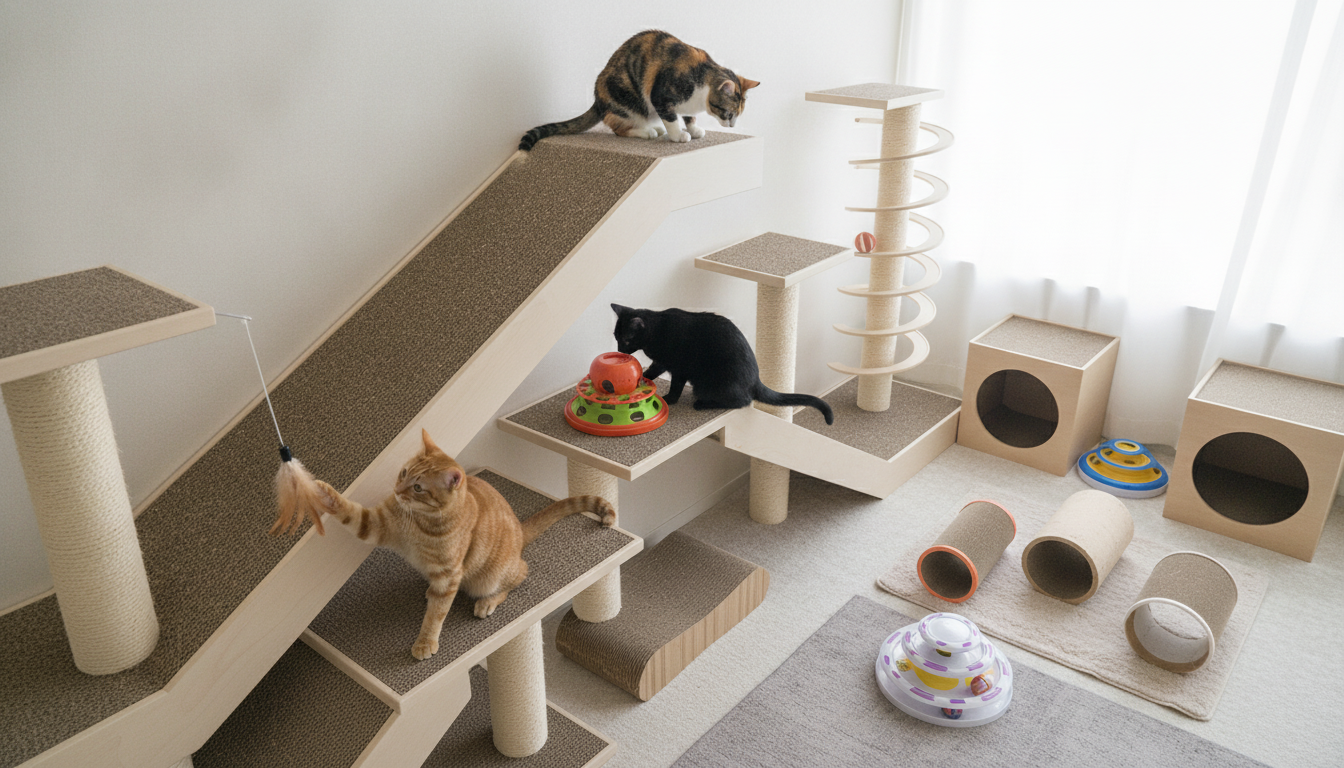
How to provide enrichment for indoor cats?
Indoor cats can live long, healthy lives, but they still need daily outlets for hunting, climbing, scratching, and exploring. The best enrichment plan mixes physical activity, mental puzzles, and environmental variety so your cat can “work” for fun the way their instincts expect.
Build a mini territory with vertical space
Cats feel secure when they can climb and observe. Add a cat tree, wall shelves, or a sturdy window perch so your cat can move up, down, and across the room. If space is tight, place one tall tower near a window to create a high-value hangout and a prime bird-watching spot.
Use play that mimics the hunt
Short, frequent play sessions are usually more effective than one long marathon. Rotate wand toys, feather lures, or soft “prey” toys and let your cat stalk, chase, pounce, and finally “catch” the toy. End with a small treat or meal to complete the hunt sequence and reduce post-play frustration.
Turn meals into a brain game
Food puzzles and treat balls slow down fast eaters and provide mental stimulation. You can split a meal into multiple small stations, hide kibble in different rooms, or use a snuffle mat. Start easy so your cat succeeds quickly, then gradually increase the challenge.
Offer safe scratching and scent-based enrichment
Scratching is stress relief, exercise, and communication. Provide both vertical and horizontal scratchers in areas your cat already likes. For scent enrichment, try catnip or silvervine (if your cat responds), rotate bedding, or introduce a new cardboard box or paper bag (handles removed) for supervised exploring.
Keep things fresh with simple rotation
Instead of buying lots of toys, keep a small “toy library.” Put most toys away and swap a few every week. Even familiar items feel new after a break, and rotation prevents boredom.
For more ideas and a step-by-step approach, visit this complete guide to providing enrichment for indoor cats.
FAQ
How often should I play with my indoor cat?
Most cats do best with 1–3 short play sessions daily (5–15 minutes each). Match the intensity to your cat’s age and energy level, and aim for a predictable routine.












Leave a comment